
'Everything can be resolved, but my husband's legacy is not up for sale.'
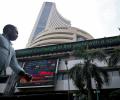
Like with all great crashes, some had noticed the cracks. "... cash balances (of banks) seem, from the available indications, to be hopelessly inadequate; and it is hard to doubt that in the next bad times they will go down like ninepins. If such a catastrophe occurs, the damage inflicted on India will be far greater than the direct loss falling on the depositors," said John Maynard Keynes in his May 1913 work "Indian Currency and Finance", written before his path-breaking work in macroeconomics laid the foundation of dealing with global crises.

The combined market capitalisation of BSE-listed companies hit an all-time high of Rs 343.48 lakh crore on Monday, amid a rally in equities after the BJP registered victory in assembly polls in three Hindi heartland states. Following the sharp uptick in the market, investors became richer by over Rs 5.81 lakh crore on Monday. The 30-share BSE Sensex jumped 1,383.93 points, or 2.05 per cent, to close at a lifetime high of 68,865.12.
The share of listed public sector undertakings (PSUs) in the overall market capitalisation has hit a three-year high of 11.4 per cent. This comes on the back of the sharp outperformance of the PSU pack over the past two years. In 2021 and 2022, the BSE PSU index gained 41 per cent and 23 per cent, respectively. Market participants said a combination of factors like value buying and bullishness, particularly in public sector banks (PSBs), were the reason for the improved prospects.

It's not only the Indian markets that command a valuation premium over their global peers; shares of subsidiaries of India-listed multinational companies (MNCs) also trade at rich valuations compared to their parent companies. An analysis of 12-month forward price-to-earnings (P/E) and price-to-book (P/B) multiples of domestically listed MNCs shows that most quotes have a premium ranging from 2.1x to 6x that of their parent. Similarly, P/B, in most cases, is significantly higher in the domestic market.

Adani Ports and Special Economic Zone and Adani Green Energy are the other two Adani Group firms to have crossed the Rs 1-trillion mark in m-cap.

Investors' wealth fell by Rs 2.89 lakh crore in two days of market fall, with the BSE Sensex tumbling 796 points on Wednesday, amid weak global market trends ahead of the US Federal Reserve's interest rate decision. Fresh foreign fund outflows and caution ahead of a host of interest rate decisions from global central banks also added to the overall bearish trend. Besides, the US Fed meeting, the BoE (Bank of England) and the BoJ (Bank of Japan) are also scheduled to meet this week.

From the 30 Sensex firms, Larsen & Toubro, Reliance Industries, Axis Bank, Asian Paints, Tata Motors, Bajaj Finance, Maruti, Bajaj Finserv, Kotak Mahindra Bank, Titan, Adani Ports and HDFC Bank were the major laggards. JSW Steel emerged as the only gainer.

The Securities and Exchange Board of India (Sebi) is reviewing the current stock categorisation framework followed by actively managed equity mutual funds (MFs) to ensure they are true-to-label. Individuals familiar with the matter said the universe of largecap and midcap stocks could be expanded by 25-50 stocks. The move follows concerns raised by industry players that the current threshold has been skewed following a sharp run-up in the domestic markets after the Covid-19 pandemic.

Two years after his dismissive stance on India's AI potential raised eyebrows here, OpenAI CEO Sam Altman on Wednesday gave a ringing endorsement to Artificial Intelligence momentum in the country -- and billed India as an important market not just for the new-age technology itself but for the ChatGPT creator as well. In New Delhi on Wednesday, Altman -- while sharing dais with Union IT minister Ashwini Vaishnaw -- said India is the second biggest market for the company and that Open AI had tripled its users here in the last year.

Not all listed companies above a threshold have spent on corporate social responsibility (CSR) in the way they were required to do. The aggregate unspent amount in 2022-23 (FY23) stood at a five-year high of Rs 1,475 crore. In FY23 listed companies spent Rs 15,602 crore while the amount to be expended was Rs 15,787 crore, according to the data from corporate tracker primeinfobase.com.

Inflows into sector and thematic (S&T) funds fell sharply from around 5,711.6 crore in February 2025 to about 170.1 crore in March 2025 - a decline of 97 per cent. With many such funds underperforming, investors need to assess whether to remain invested or exit.

The Centre may overshoot the Rs 56,260 crore target for dividend receipts from central public-sector enterprises (CPSEs) set for FY25 and is likely to end up getting around Rs 65,000 crore this financial year, according to a senior government official. This excludes dividend from nationalised banks and financial institutions. As on October 21, the Centre collected Rs 28,913 crore as dividend and other investment from CPSEs, accounting for over 50 per cent of the Budget Estimate for FY25.


Ride-hailing unicorn Rapido is quickly scaling up its four-wheeler segment, which now contributes up to 25 per cent of its total bookings. Aravind Sanka, Rapido's cofounder, in a video interview with Udisha Srivastav/Business Standard, shares insights on the company's plans to expand into the segment, how BluSmart's exit has created an opportunity for the company, its push towards green mobility, and navigating state-specific policies.

The meltdown in Dalal Street that wiped out investor wealth to the tune of 44 trillion in 2025 also seems to be having a ripple effect on the country's vibrant automobile retail sales.

The current spurt in the stock market is on account of strong fundamentals and robust corporate earnings and retail investors can look for buying opportunities to accumulate quality stocks, experts said.

The Tata group companies are now more valuable than all the listed central public sector undertakings (CPSUs) or companies in the country. The key 20 listed Tata companies ended the 2021 calendar year with a combined market capitalisation of Rs 23.36 trillion, ahead of the 70 listed CPSUs, which had a combined m-cap of Rs 23.2 trillion. In comparison, these CPSUs had a combined market capitalisation of Rs 16.7 trillion at the end of December 2020 against the Tata group firms' combined m-cap of Rs 15.7 trillion.

'Every Indian should move to an EV, and the government should not buy any fossil fuel cars. The government should become the first driver of EV adoption.'

The combined market capitalisation of BSE-listed companies hit an all-time high of Rs 337.67 lakh crore ($4 trillion) on Friday amid a rally in equities, mainly on account of favourable macroeconomic data and continuous foreign fund inflows. Rising for the fourth straight day, the 30-share BSE Sensex jumped 492.75 points or 0.74 per cent to settle at 67,481.19 points. During the day, it rallied 575.89 points or 0.85 per cent to 67,564.33 points.
From the Sensex pack, Bajaj Finserv, Mahindra & Mahindra, Axis Bank, Bajaj Finance, Adani Ports, ICICI Bank, Zomato and UltraTech Cement were among the biggest gainers. However, ITC, Nestle, State Bank of India, Reliance Industries, Asian Paints and Tata Consultancy Services were among the laggards.

The Adani group will have understood the fragility of investor trust in the group. The group needs to improve transparency including in areas like share-ownership (which they have long and mistakenly believed can be side-stepped) and related-party transactions, among others, Amit Tandon and Hetal Dalal point out.

Investor wealth slumped by a whopping Rs 5.3 lakh crore on Friday as the benchmark BSE Sensex crashed more than 1,900 points to post its biggest single-day fall in nearly ten months. At the close of trade, the total market capitalisation of BSE-listed companies eroded by Rs 5,37,375.94 crore to Rs 2,00,81,095.73 crore. The total market capitalisation of these companies stood at Rs 2,06,18,471.67 crore on February 25.

From the Sensex pack, Bharti Airtel, HDFC Bank, Titan, UltraTech Cement, ITC, Sun Pharma, Bajaj Finserv, Bajaj Finance, Hindustan Unilever and Kotak Mahindra Bank were among the major gainers. Tata Steel, Axis Bank, NTPC, ICICI Bank and IndusInd Bank were the major laggards.
The Indian equity market has emerged as third biggest after China and Hong Kong in the emerging Asian region, with a market capitalisation of nearly $600 billion, a latest ADB report says.

Equity market capitalisation dropped to a seven-month low in February, with the top 10 companies losing a whopping Rs 3,33,307.62 crore in market valuation last week. The total equity market capitalisation (m-cap) in February 2022 stood at Rs 2,49,97,053.39 crore. The previous low was in July 2021, when the m-cap of BSE-listed companies was at Rs 2,35,49,748.9 crore. In January, the m-cap stood at Rs 2,64,41,207.18 crore.

Titan Company on November 21, became the second Tata group firm to join Rs 3 trillion market capitalisation (market cap) club after its shares hit a new high of Rs 3,400, up nearly 2 per cent on the BSE in Tuesday's intra-day trade. At 12:28 PM; with a market cap of Rs 301,847 crore (Rs 3.02 trillion) Titan stood at number 16th position in overall market cap ranking on the BSE listed companies, the exchange data shows. Titan overtook paint company Asian Paints, which has a market cap of Rs 300,579 crore, data shows.

With India's market capitalisation surpassing the $3-trillion mark, stocks across the board are adding heft. The upper limit for qualifying as a mid-cap stock -under the Securities and Exchange Board of India's (Sebi's) definition for mutual fund reclassification - has hit an all-time high of $5.4 billion. In 2013, amid the taper tantrum sell-off, it had dropped to just $1 billion, shows an analysis done by ICICI Securities.

On average, 49 sexual harassment cases were reported every day in 2022.

Investors' wealth eroded by Rs 3.46 lakh crore on Wednesday as equity markets took a sharp tumble amid weak global trends and foreign fund outflows. The 30-share BSE Sensex fell by 676.53 points or 1.02 per cent to settle at 65,782.78. During the day, it plunged 1,027.63 points or 1.54 per cent to 65,431.68. In line with the weak trend in equities, the market capitalisation of BSE-listed firms eroded by Rs 3,46,947.54 crore to Rs 3,03,33,258.69 crore.
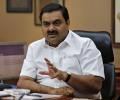
Adani Group on Friday raised Rs 4,850 crore from the sale of 13.5 per cent of its stake in Fortune oil maker Adani Wilmar as part of a strategy to exit non-core activities to focus on main infrastructure business. The conglomerate, which last month announced its exit from Adani Wilmar by selling the bulk of its stake to a joint venture partner, had on Thursday announced sale of 17.54 crore shares (13.50 per cent equity) in the company on January 10 (to non-retail investors) and on January 13 (to retail investors) at a floor or minimum price of Rs 275 apiece.
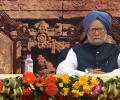
'He will be remembered more for what he did as finance minister -- as someone who functioned well when the political fallout was taken care of.'

In June, Sensex went up 6.6% and Nifty 6.9%, their best monthly gains since December 2023.

Fundraising momentum is expected to accelerate further in the New Year, potentially surpassing 2024's record figures
Since August 9, RIL shares have gone up by over 11 per cent.

Active largecap funds, which have the toughest job in terms of outperforming the benchmark, did better in 2023 as their bets in the mid and smallcap stocks paid off.

Investors became poorer by Rs 1.36 lakh crore on Friday as the markets witnessed a sell-off amid weak global trends. Benchmark stock indices Sensex tanked 671.15 points or 1.12 per cent to close at 59,135.13, as 21 of its scrips declined. The sharp decline in equities eroded Rs 1,36,037.96 crore from the market capitalisation of BSE-listed firms and that now stands at Rs 2,62,94,723.65 crore.

India's service sector activity accelerated slightly in April largely driven by a quicker increase in new order inflows, which also underpinned a faster expansion in employment, a monthly survey said on Tuesday. The seasonally adjusted HSBC India Services PMI Business Activity Index reached 58.7 in April, up from 58.5 in March, indicating a sharp and stronger expansion in service sector output.

The combined market capitalisation of Adani Group companies fell by Rs 54,876 crore, to Rs 10.92 trillion, as investor sentiment turned bearish on Wednesday. Shares of Adani Transmission fell by 7.7 per cent to close at Rs 886 while those of Adani Power lost 7.1 per cent to end the day at Rs 323. The stock of Adani Enterprises, the flagship company of the group, lost 6.2 per cent to finish at Rs 2,530.
